Whispers of the Cosmos: How Galaxies Lose Their Gas
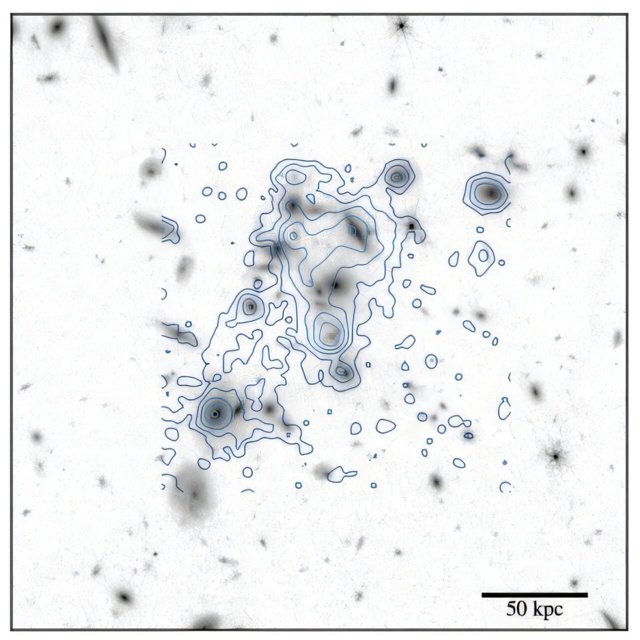
In the grand tapestry of the universe, galaxies dance through the cosmic ocean, their gas like shimmering stars in a night sky. Recently, a team of researchers led by Jonathan Freundlich from the University of Strasbourg uncovered a captivating tale of how these galaxies lose their precious gas in dense cosmic environments. Through deep observations of a galaxy group located a staggering 7 billion light-years away, they found that these celestial bodies hold onto just a fraction of the gas compared to their isolated counterparts.
Once upon a time, around 10 billion years ago, the universe brimmed with star formation, a cosmic ballet of creation. Yet, as time drifted onward, the rhythm softened, and star formation rates plummeted. This decline is influenced by numerous factors, such as the fierce winds of stellar births and the lurking presence of black holes, which can heat or expel the gas needed for new stars. Environmental disruptions play a significant role too, especially since most galaxies are not solitary but part of groups.
In these clusters, tidal forces tug at galaxies, reshaping them and causing their gas to spill away like sand through fingers. Interactions with hot gas from the intergalactic medium strip these galaxies of their gas, leaving them parched and unable to form new stars. The study highlights the rarity of measuring molecular gas in these groups, despite its vital role as the fuel for new celestial creations.
Utilizing impressive technology like the NOEMA interferometer and the IRAM 30m telescope, the researchers captured the essence of molecular emissions from carbon monoxide within these distant galaxies. The group known as COSMOS-Gr30, with its dense collection of at least 44 galaxies, is a pivotal window into this epoch of cosmic history. The findings reveal that these galaxies retain a mere 20% to 40% of the gas reservoirs found in isolated galaxies, a striking illustration of how environment shapes the destiny of star formation.
As we gaze into the depths of space, we witness the intricate dance of galaxies, each one affected by its surroundings. This study serves as an essential reminder of the delicate balance that governs the universe. As future explorations extend to more galaxy groups, we may uncover even deeper secrets about how our universe evolves, one star at a time.


💬 Comments
Log in to join the conversation.
No comments yet.