The Dance of Chemistry and Biology: A Cosmic Journey
In the vast expanse of time, about 4.6 billion years ago, our planet was born from cosmic dust and gas. This fiery orb, once a molten landscape, began its slow transformation as it cooled, giving rise to oceans that shimmered with a hint of acidity beneath skies of pink. Life, however, was a distant dream—one that would take millions of years to unfold.
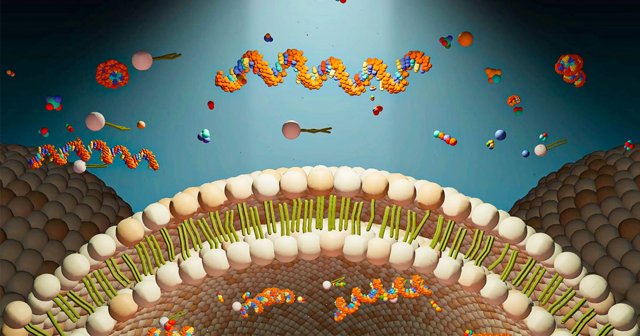
Fast forward to a time when the Earth's conditions finally aligned, and a grand chemical experiment ignited. Molecules began to entwine in a dance, forming loops that were self-sustaining and self-replicating. It was a remarkable leap—from inert particles to the beginnings of life. Over time, these primitive systems evolved, growing ever more complex, until they finally burst forth with the spark of life.
With life came movement, communication, and the ability to adapt. Organisms began to explore their environments, forming communities and engaging in a delicate balance of survival. Through cycles of growth and decay, life flourished, carving its niche in every corner of our planet. But as life thrived, it also began to ponder its own existence. Questions arose: Where did we come from? What is our purpose?
For thousands of years, humans have wrestled with these profound questions. From ancient philosophers to curious children, the quest for understanding has transcended time. By the mid-20th century, scientific inquiry into life's origins accelerated with the advent of molecular biology and genetics. Yet, with the explosion of hypotheses came discord, as experts debated which molecules—RNA, proteins, or lipids—held the keys to life's beginnings.
But within this turmoil lies opportunity. A new generation of researchers is stepping beyond traditional confines, embracing a broader perspective on life's origins. They propose that perhaps no single molecule is responsible for the emergence of life. Experiments reveal that many precursors to life's building blocks could have formed easily under early Earth conditions. The challenge now is to understand how these molecular interactions evolved into the rich tapestry of life we see today.
In this fascinating journey, biologists and chemists are collaborating, pushing the boundaries of knowledge. By merging their respective fields, they are uncovering the mysteries of life's origin story, crafting new biological systems that may never have existed before. It’s an exciting time, filled with possibilities and insights, as we delve deeper into not just what life is, but what it can become.





💬 Comments
Log in to join the conversation.
No comments yet.