Exploring Exoplanets Through Gravitational Waves
Hello, Nudgeville! Are you ready to dive into the cosmic wonders of our universe? Today, I’m excited to share some thrilling news from the world of astrophysics that might just change how we look for planets beyond our solar system. Grab your headphones because this journey is going to be out of this world!
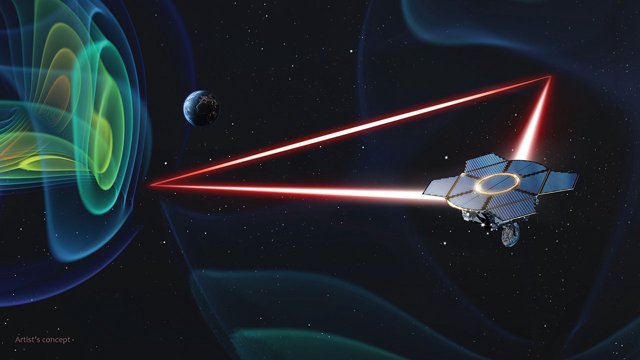
Meet LISA, the Laser Interferometer Space Antenna, a groundbreaking observatory set to launch in the mid-2030s. This innovative project, led by the European Space Agency (ESA) with support from NASA, aims to detect gravitational waves—those tiny ripples in space-time caused by massive objects like orbiting stars. But here’s the cool part: two recent studies suggest that LISA could help us discover a new type of exoplanet—planets that orbit around double white dwarf systems!
So, what exactly is a double white dwarf system? Imagine two white dwarfs, the remnants of stars similar to our sun, spinning around each other in a tight embrace. If an exoplanet happens to be orbiting one of these stars, its gravitational influence could leave a unique mark on the gravitational waves emitted by the system. It’s like the planet is sending out its own secret signal, which LISA will be equipped to decode!
Casey McGrath, a postdoctoral researcher, has been diving deep into this detection method. He explains that the gravitational waves from these double white dwarfs will have sidebands—additional signals that indicate the presence of an exoplanet. This is similar to radio communications, where the main signal gets modulated to carry information. In the case of LISA, the sidebands will tell us about the existence of these hidden worlds.
This research is particularly exciting because, while there have been some discoveries of exoplanets around isolated white dwarfs, finding them around double white dwarfs would be a first! With estimates suggesting there could be around 10 million double white dwarf systems in our galaxy, LISA is poised to uncover a treasure trove of new planetary systems!
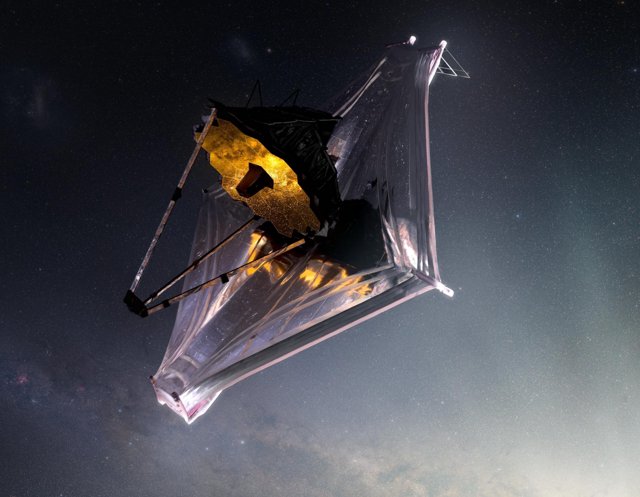
As we look toward the future of space exploration, the combination of LISA’s gravitational wave detection and the James Webb Space Telescope’s observational prowess could reveal stunning new insights about our universe. So, keep those eyes on the stars, Nudgeville! The cosmos is full of mysteries waiting to be solved, and who knows what we might discover next?


💬 Comments
Log in to join the conversation.
No comments yet.