The Mystery of the Disappearing Planet: TOI-2535 b and Its Wobbly Neighbor
Rad Discoveries in the Cosmos
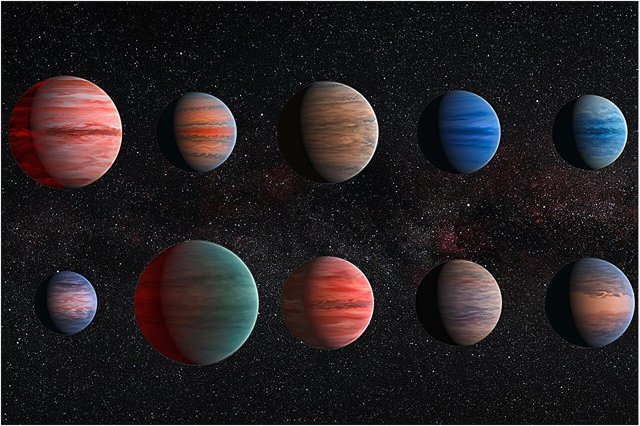
Hey, fellow space enthusiasts! So, check this out: astronomers at UCLA just dropped some serious knowledge about a planet that's got everyone scratching their heads. They’ve discovered the first known “disappearing planet,” TOI-2535 b, which is chilling about 1,000 light-years away. This bad boy is a “hot Jupiter,” which means it's a gas giant that zips around its star in a blistering 8.25 days. That’s like ten times faster than Mercury, our speedy little planet! How rad is that?
Now, here’s where it gets even more interesting. Over the span of seven years, researchers were watching TOI-2535 b transit its star, meaning it was blocking some of the star’s light. But then, poof! It vanished from sight. But don’t panic, it didn’t just ghost us. Instead, it turns out that gravity from a neighboring planet is pulling on it, tilting its orbit like a top. Imagine two skaters doing tricks side by side, affecting each other's moves—it's a cosmic dance!
The way they figured this out is through NASA’s Transiting Exoplanet Survey Satellite (TESS). TESS watches stars for tiny changes in brightness when planets pass in front of them, kind of like how we look for gaps in a crowd to see our friends. But TOI-2535 b was acting all out of sync, with its transits showing up late or early by up to six hours. Over time, these transits got shorter and shallower until they totally disappeared. Talk about a cosmic cliffhanger!
According to the researchers, the gravitational pull from this unseen neighbor is so strong that it’s causing the planets to wobble in their orbits. Imagine trying to ride a skateboard while your buddy keeps nudging you—totally messes with your balance, right? That’s basically what’s happening here. The next time TOI-2535 b will transit its star might not be for another 30 to 50 years. Patience is key in the universe!
So why should we care? This discovery flips our understanding of planet formation on its head. Hot Jupiters, like TOI-2535 b, are usually thought to be alone in their orbits. But here we have a case where two planets are interacting so intensely that it's creating this wild wobble. It’s a reminder that the universe is way more complex and rad than we ever imagined. Keep your eyes on the skies, folks—who knows what other mysteries are out there waiting to be unraveled!


💬 Comments
Log in to join the conversation.
No comments yet.