Exploring the Mysteries of Ice Giants: Argon and Planetary Origins
In the vastness of our solar system, where swirling gases and icy bodies dance in the cosmic silence, the ice giants Uranus and Neptune hold secrets that whisper of their origins. Recently, a study led by the Southwest Research Institute has shed light on how measuring a simple argon isotope could unlock the mysteries of these distant worlds. It’s a reminder that even in the cold embrace of space, there are stories waiting to be told.
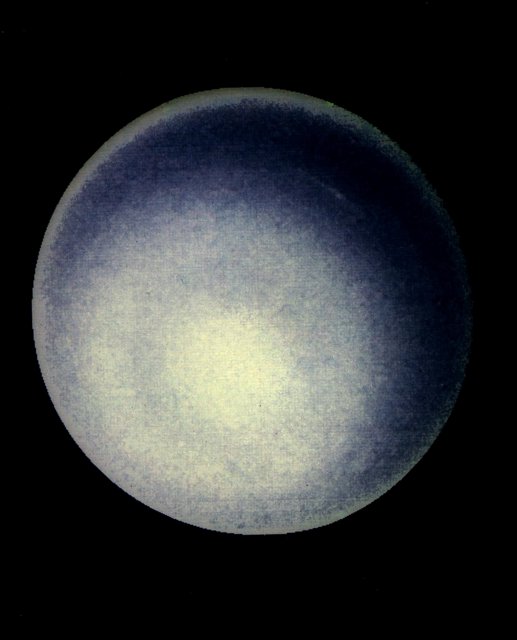
Uranus and Neptune, often classified as ice giants, have intrigued scientists for decades. Yet, despite our keen interest, much about their interiors remains cloaked in mystery. Dr. Olivier Mousis, a planetary scientist, and his team sought to unravel this enigma by investigating the atmospheric presence of argon-40. This noble gas could possibly reveal whether the giants are more rock than ice, reshaping our understanding of their very nature.
Argon-40, the isotope at the heart of the study, may come from two distinct sources. One portion could be a remnant from the primordial nebula that birthed our solar system, while another may result from the radioactive decay of potassium-40 found in the rocky depths of these planets. By discerning the origins of this argon, scientists hope to glean insights into the composition that lies beneath the swirling clouds of gas.
Through complex modeling, the research team discovered that the argon inherited from the protosolar nebula is more abundant than previously imagined. This finding suggests that atmospheric measurements might tell us more about how these planets formed in the early solar system than about their current physical state. The notion that what we see today is a reflection of ancient chemical processes is both poetic and profound.
Furthermore, the study hints at the possibility of a frost line in the early solar system, where temperatures were low enough to freeze argon gas into solid particles. These icy particles, rich in argon, could have influenced the very building blocks of Uranus and Neptune. Understanding this could illuminate the pathways of planetary formation, showing us how the conditions of the past echo through time.
As we look to the stars, this research opens up a world of possibilities. Future atmospheric probes may one day test these theories, peeling back the layers of history wrapped around these ice giants. The journey of discovery continues, reminding us that even in the silence of space, every atom carries a story of creation, time, and the mysteries of our universe.





💬 Comments
Log in to join the conversation.
No comments yet.