Crisis Communications: The Art of Reassurance in Troubled Skies
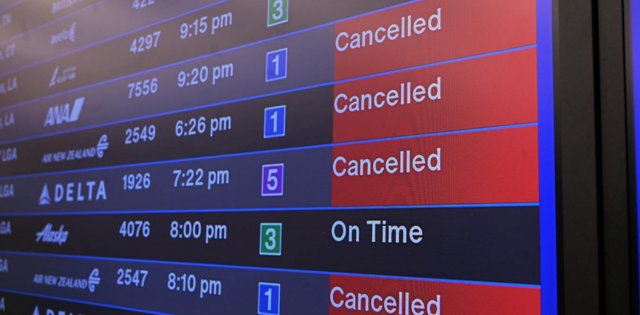
As someone who loves capturing the world through the lens of a vintage film camera, I often find that the best moments happen unexpectedly, much like the recent national ground stop that left thousands of travelers stranded. On November 13, 2026, the Federal Aviation Administration (FAA) grounded all domestic flights due to failures in air traffic communications systems. This incident has sparked discussions about the importance of effective crisis communication in moments of uncertainty.
When a crisis unfolds, it’s essential to react quickly and accurately. Shannon A. Bowen, a crisis communications expert, emphasizes that the first principle is to provide information swiftly, even if it’s limited. Delaying a response can create a void filled with misinformation, which only adds to public anxiety. The administration did manage to respond quickly, but the choice of words used during the press conference raised eyebrows. When Secretary Markwayne Mullin repeatedly stated that “nothing nefarious” was at hand, it inadvertently fueled speculation rather than quell it. In crisis communication, sometimes less is more!
By introducing the phrase “nothing nefarious,” the administration opened the door to questions about possible cyber attacks or other sinister motives. Instead, it might have been more reassuring to clarify that the issue stemmed from hardware failures rather than suggesting the possibility of external threats. This reminds me of how a small light leak can unexpectedly change the mood of a photograph—sometimes, the simplest truths can create the most comforting images.
Moreover, the aftermath of this ground stop revealed its wide-reaching consequences. Football teams, families, and business travelers alike faced disruptions, demonstrating how interconnected our lives are. For many in the South, like myself, SEC football embodies the spirit of the community, and disruptions to such cherished events highlight the urgency of the situation. The administration’s response should have acknowledged the gravity of this crisis, as it was more than just a technical glitch; it was an emergency that affected countless lives.
As we reflect on this incident, it’s clear that communicating effectively in times of crisis is an art form. The responsibility of leaders is to provide clear, concise, and accurate information that reassures the public. In moments of uncertainty, let’s strive for authenticity in our communication, capturing the truth without the shadow of doubt—just like a perfectly lit sunset captured on a roll of film.






💬 Comments
Log in to join the conversation.
No comments yet.