Farewell to the Swift Telescope: A Stellar Journey Ends
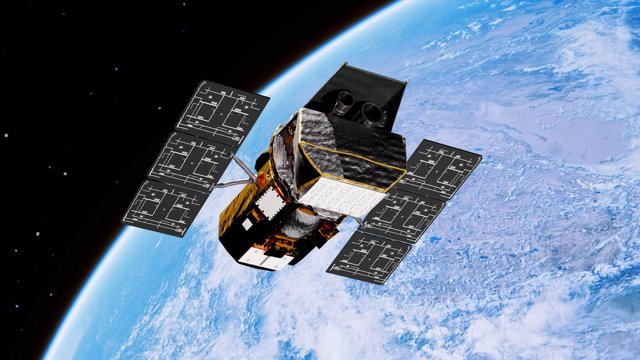
Hey fellow space enthusiasts! Today, I have some bittersweet news to share about a remarkable space observatory that has been making waves in the astronomical community for nearly two decades. The Neil Gehrels Swift Observatory, a trailblazer in the study of gamma-ray bursts, has recently met its fiery end as it reentered Earth's atmosphere on November 4. This marks the conclusion of an extraordinary mission that lasted far longer than its original two-year plan!
Launched in 2004, Swift was designed to tackle the mysteries of gamma-ray bursts—those intense flashes of energy that light up the universe. These bursts are the most powerful explosions known to science, and Swift was equipped with a unique ability to respond to them almost immediately. Imagine a telescope that can quickly swing into action when a cosmic event occurs! This agility made Swift a key player in modern astronomy, allowing scientists to capture invaluable data about these fleeting phenomena.
Over the years, Swift has faced its share of challenges. As it orbited our planet, the spacecraft continuously lost altitude due to collisions with atmospheric molecules. This gradual descent was accelerated by increased solar activity, ultimately leading to its uncontrollable fall from space. Plans were made to lift Swift back to a safer orbit, but unfortunately, technical issues thwarted these efforts. With no backup on the horizon, the telescope's fate was sealed.
What made Swift truly special was its trio of instruments. The Burst Alert Telescope could detect gamma-ray emissions from a significant chunk of the visible sky, allowing scientists to pinpoint where these bursts originated. Once a burst was detected, Swift could quickly reposition itself to capture the event across different wavelengths—X-rays, visible light, and ultraviolet. This unique combination of capabilities set Swift apart from any other observatory, leading to groundbreaking discoveries right from the moment it was launched.
In fact, Swift made its first major finding just a month after liftoff! It revealed that certain stellar remnants with powerful magnetic fields could emit gamma-ray signatures, challenging previous classifications of these cosmic bursts. Prior to Swift, scientists had divided gamma-ray bursts into two categories based on their duration, but Swift's observations complicated that picture, leading to deeper insights into their origins.
As we bid farewell to the Swift Observatory, let’s take a moment to appreciate the wealth of knowledge it has provided us. Its legacy will undoubtedly continue to inspire future generations of astronomers and space lovers alike. Here’s to the adventures in the universe that await us next—keep your eyes on the stars!

💬 Comments
Log in to join the conversation.
No comments yet.