Unveiling Comet Encke: New Insights from the Subaru Telescope
Unveiling Comet Encke: New Insights from the Subaru Telescope
Hey, space enthusiasts! Have you ever gazed up at the night sky and wondered about those mesmerizing comets that streak across our celestial dome? Well, brace yourselves for some exciting news! The remarkable Subaru Telescope has just shared some fascinating findings about Comet 2P/Encke, revealing its shape and temperature like never before. This comet, known for its periodic visits to the inner solar system every 3.3 years, has intrigued astronomers for centuries, and these new observations are a significant leap in our understanding.
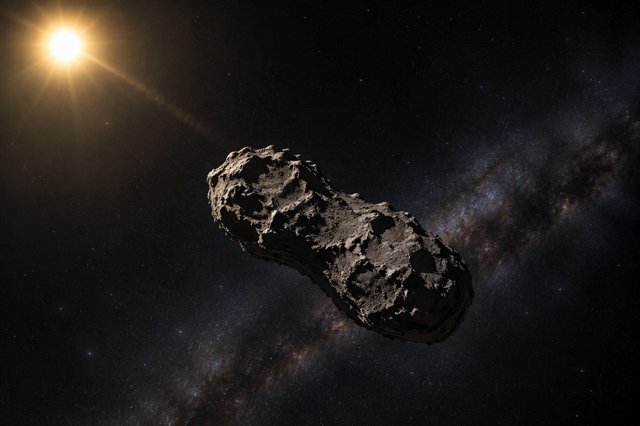
So, what did the Subaru Telescope uncover? Utilizing mid-infrared observations, researchers determined that Encke's nucleus, the solid core of the comet, is elongated—measuring about 7 kilometers in length and 3 kilometers in width. This shape is crucial because it tells us a lot about the comet’s behavior as it interacts with the Sun. As the comet rotates, the brightness of its surface changes, allowing scientists to infer its unique form. Isn’t it incredible how a rotating object in space can provide us with so much information?
But there’s more! The temperature of Encke's nucleus was measured at approximately 328 Kelvin (around 55°C). This data is essential because it helps scientists understand how heat affects the comet’s activity and its orbit. Cometary nuclei, like Encke's, are like time capsules, preserving materials from the early solar system over 4.6 billion years ago. By studying them, we can unlock secrets about our cosmic origins.
The study of Comet Encke also ties back to historical astronomical theories. In the mid-20th century, Fred Whipple introduced the “dirty snowball” model, suggesting that comets are made of ice and dust. This model laid the groundwork for much of our current understanding of these fascinating celestial objects. With these new findings, we can see how Encke's nucleus aligns with Whipple's theories while also adding a fresh layer of complexity to our knowledge.
In conclusion, the Subaru Telescope’s observations of Comet Encke not only help us visualize this comet's unique shape and temperature but also deepen our understanding of the dynamics of comets in our solar system. As we continue to explore the cosmos, every discovery brings us one step closer to understanding the magnificent universe we inhabit. So, next time you catch a glimpse of a comet lighting up the night sky, remember the science and stories behind it!





💬 Comments
Log in to join the conversation.
No comments yet.