Unlocking the Secrets of Dark Matter with the Extremely Large Telescope
Hey there, fellow stargazers! Are you ready to dive into the cosmic mysteries surrounding dark matter? Well, buckle up, because the Extremely Large Telescope (ELT) is gearing up to unlock some of those secrets when it begins its observations in 2029. This impressive piece of technology, with its massive 39.3-meter-diameter mirror, is set to tackle one of the most perplexing questions in modern astronomy: what the heck is dark matter?
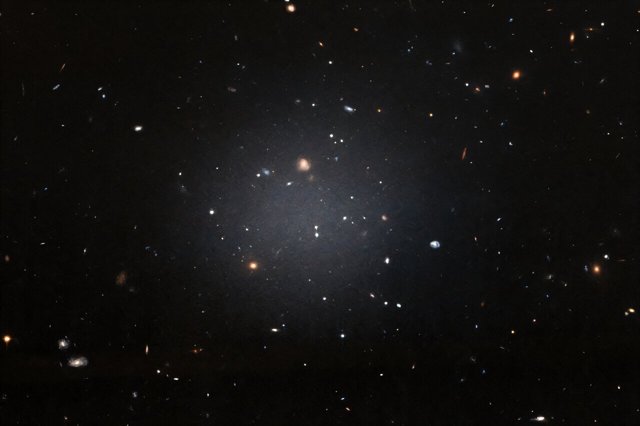
The ELT will be equipped with a cutting-edge instrument called NEXUS@SHARP, which stands for Spectrograph for High Angular Resolution Physics. Sounds fancy, right? This multi-object spectrograph is specifically designed to delve into the fascinating world of ultra-diffuse galaxies (UDGs). These galaxies are quite the enigma—they're about the same size as our Milky Way but contain far fewer stars, making them appear incredibly dim and spread out. In fact, their puffiness poses a challenge to current galaxy formation models, particularly within the Lambda cold dark matter (ΛCDM) framework.
So, why are UDGs so interesting? Well, they seem to contradict what we understand about dark matter halos, which are the invisible structures that surround galaxies. Astronomers have noticed a mismatch between the sizes of these halos and the size of the UDGs themselves. To get to the bottom of this cosmic puzzle, researchers are looking to study the globular clusters (GCs) that orbit around these faint galaxies. GCs are clusters of stars that are much brighter than their host galaxies, making them easier to observe and analyze.
However, current telescopes haven’t been able to capture the detailed information needed about these globular clusters due to limitations in their observational capabilities. Enter NEXUS@SHARP! This innovative spectrograph is designed to overcome these challenges by allowing scientists to observe multiple globular clusters simultaneously. This means that astronomers will be able to gather more data and gain better insights into the dark matter halos surrounding UDGs.
By studying the number and characteristics of globular clusters, researchers can learn about the mass of the dark matter halo and even uncover details about the galaxy's formation history. It’s like putting together a cosmic jigsaw puzzle, where each globular cluster serves as a crucial piece. The potential knowledge that could come from the ELT and NEXUS@SHARP is truly mind-blowing and may help us answer fundamental questions about our universe.
So, keep your eyes on the stars, because in just a few years, we might finally start to unravel the dark mysteries of our cosmos with the help of the Extremely Large Telescope!





💬 Comments
Log in to join the conversation.
No comments yet.