Mysteries of Asteroid 1998 KY26: Dark Comet or Just a Rock?
Exploring the Unusual Behavior of Asteroid 1998 KY26
Hey, space enthusiasts! Today, I want to share some intriguing updates about the near-Earth asteroid 1998 KY26, which is set to be visited by Japan's Hayabusa2 spacecraft in 2031. This little cosmic traveler, measuring only 11 meters (or about 36 feet) across, has been puzzling astronomers due to its unexpected behavior as it zips around the Sun. Some researchers even suggested that it might be a 'dark comet,' propelled by gas escaping from its surface. However, recent simulations have cast doubt on that theory.
Scientists Korbin Hansen and Masatoshi Hirabayashi from the Georgia Institute of Technology conducted research that indicates 1998 KY26 is likely too warm to hold onto ice. Their findings, published in the journal Icarus, challenge the idea that the asteroid's unusual acceleration is due to escaping gas. Instead, they propose that the asteroid's movement might be better explained by sunlight pressure combined with heat radiating from its surface.
So, what exactly makes 1998 KY26 so special? For one, it spins incredibly fast, completing a full rotation in just under five and a half minutes! As it orbits the Sun, it experiences a small push out of the plane of its orbit, leading to its classification as a potential dark comet. However, for this to be true, the asteroid would need to maintain extremely cold temperatures to preserve any ice within it.
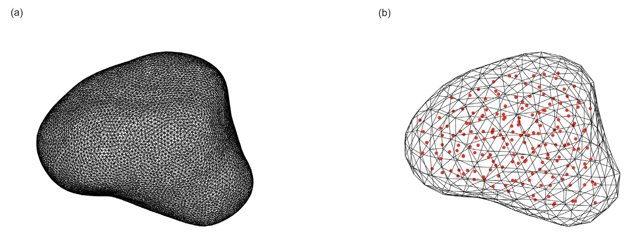
To investigate, Hansen and Hirabayashi developed a 3D computer model that simulated various factors affecting the asteroid's temperature, including size, reflectivity, and heat conduction. Their results showed that for ice to survive within 1998 KY26, temperatures would need to be below about -128°C (-198°F). However, even in the coldest parts of the asteroid, temperatures averaged around -47°C (-53°F) or higher. This suggests that any ice present would be lost in just a couple of thousand years, making 1998 KY26 quite dry.
As we await the Hayabusa2 mission, which will provide more definitive answers about this fascinating asteroid, the current research offers valuable insights into its nature. Whether it's a rocky body pushed by sunlight or something more mysterious, 1998 KY26 continues to capture the imagination of astronomers and space lovers alike. So, keep looking up at the stars, and who knows what other cosmic secrets we might uncover next!



💬 Comments
Log in to join the conversation.
No comments yet.