The Surprising Atmosphere of Lava Planet TOI-561 b
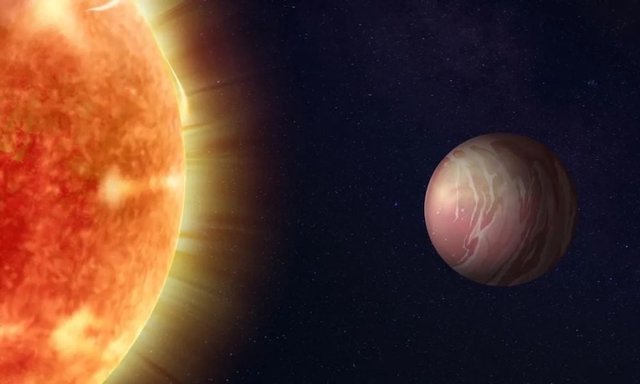
Hey, fellow stargazers! Today, I’m thrilled to share some mind-blowing news from the cosmos—an update on TOI-561 b, a super-Earth exoplanet that’s hotter than a summer day in the Sahara! This molten lava world has recently made headlines for its unexpected atmosphere, and the findings are as fascinating as they are surprising.
TOI-561 b, located about 280.5 light-years away in the constellation Sextans, is known for its blistering surface temperatures, which can reach over 2,000 K (that’s around 3,100°F!). This extreme heat turns rock into lava, creating a unique landscape that would make any lava enthusiast drool. Scientists initially believed that being so close to its star would mean TOI-561 b couldn’t hold onto any atmosphere. However, recent observations from the James Webb Space Telescope have shattered that assumption!
In a study led by researchers from the University of Montreal, the team revisited TOI-561 b and confirmed that it possesses a thick atmosphere filled with clouds or haze. This discovery is particularly intriguing since it challenges previously held beliefs about ultra-short period (USP) planets like TOI-561 b. Typically, these rocky worlds are thought to be too small and too hot to retain any significant gaseous envelope, so finding a robust atmosphere here is a real cosmic surprise!
The Webb telescope’s observations took place over 37 hours, allowing scientists to monitor three full orbits of TOI-561 b, each lasting just 10.5 hours. What’s remarkable is that the dayside of the planet is much cooler than expected. The researchers theorized that this could be due to the atmosphere reflecting a significant amount of heat back into space—around three-quarters of it, in fact! This high reflectivity is indicated by a high-albedo source, which suggests the presence of clouds or haze that act like a protective sunscreen, shielding the planet from its star’s intense radiation.
Lisa Dang, a co-author of the study, emphasized the importance of observing the planet’s brightness and heat changes over time to gain a clearer understanding of its atmospheric properties. As we continue to explore distant worlds like TOI-561 b, each discovery teaches us more about the diversity of planetary systems and the incredible possibilities that await us among the stars. Who knows what other surprises the universe has in store? Until next time, keep your eyes on the skies!


💬 Comments
Log in to join the conversation.
No comments yet.