Ice Older Than Stars: A Cosmic Discovery with James Webb
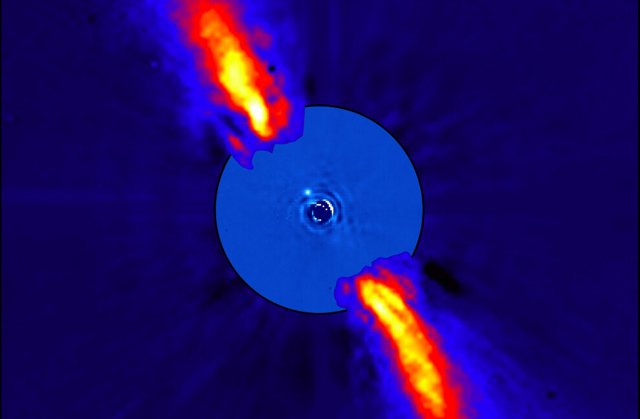
Hey there, fellow stargazers! Today, I’m excited to share some truly fascinating news from the cosmos that showcases the extraordinary capabilities of the James Webb Space Telescope. Researchers recently made a stunning discovery around the young star Beta Pictoris, which is located about 64 light-years away from Earth. This star is still in its infancy at just 20 million years old, but what really caught the astronomers' attention is the ice they found in the surrounding debris disk—ice that predates the star itself!
Beta Pictoris is surrounded by a chaotic disk filled with dust and rubble, where planets are currently forming. This disk has been a subject of interest for years, and astronomers have even identified three planets within it. The latest study, led by astronaut Sarah Betti, utilized the advanced capabilities of the James Webb Space Telescope to search for ice within this disk and found both water and carbon dioxide ice, which is a big deal! The water ice they discovered is described as 'glassy' instead of crystalline, and it has a composition similar to the ices found in comets from our own Solar System.
What’s particularly exciting here is that the presence of these ices suggests that the building blocks for water-rich worlds could be quite common around young stars. The disk around Beta Pictoris is like a cosmic laboratory, allowing astronomers to study how planetary systems grow and evolve. The outer regions of the disk are chilly enough for volatile molecules like water to freeze, creating this icy reservoir we’re learning about.
Despite past searches yielding no results, the James Webb Space Telescope’s advanced instruments allowed researchers to successfully identify these ices. By looking at the light reflected from the disk and analyzing its spectrum, they could pinpoint the unique signatures of both water and carbon dioxide ice. Fascinatingly, they found that the two types of ice are mixed together, which helps them survive the harsh ultraviolet radiation from the star, rather than sitting separately as pure grains.
In total, the study indicates a ratio of about one carbon dioxide molecule for every ten water molecules, which falls within the ranges observed in our own Solar System’s comets. This discovery opens up new avenues for understanding the chemistry of early planetary systems and the potential for finding habitable worlds elsewhere in the universe.
As we continue to learn more about the cosmos, it’s clear that our universe is full of surprises. So, keep your eyes on the night sky and stay curious, my fellow space enthusiasts!




💬 Comments
Log in to join the conversation.
No comments yet.